Want to eat better?
Scan your food. We'll do the rest.
15 meals for free. No card asked.
See it work before you give a card. Your photo stays with the meal and leaves with your account.
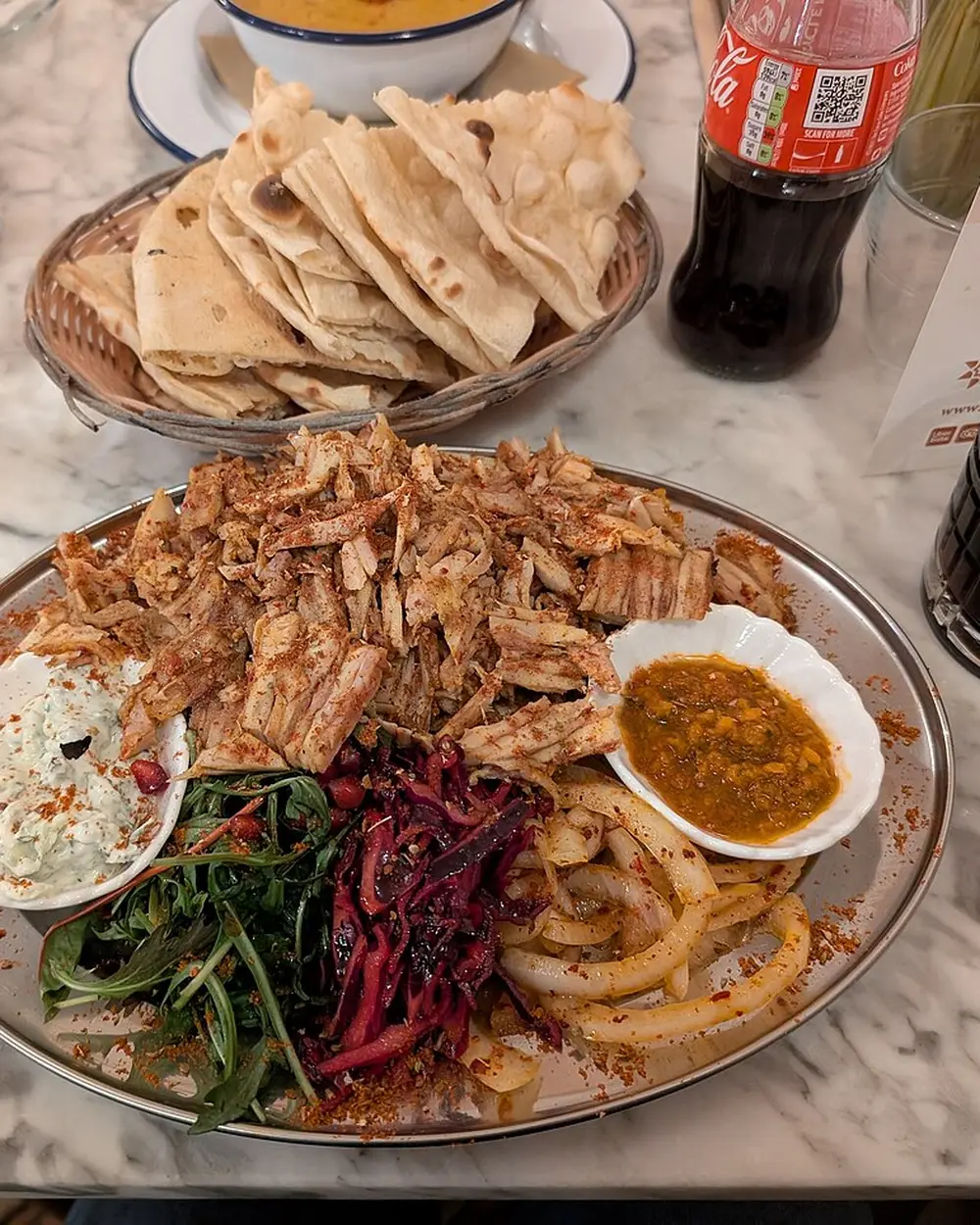
Is this fine?
Chicken shawarma, large
640kcal1,140 kcal left, but over a third of your day and most of your sodium.
Counted the garlic sauce. Say “no sauce” if there wasn’t any.
The app
How it looks.
Photographed from the build that goes to the App Store.
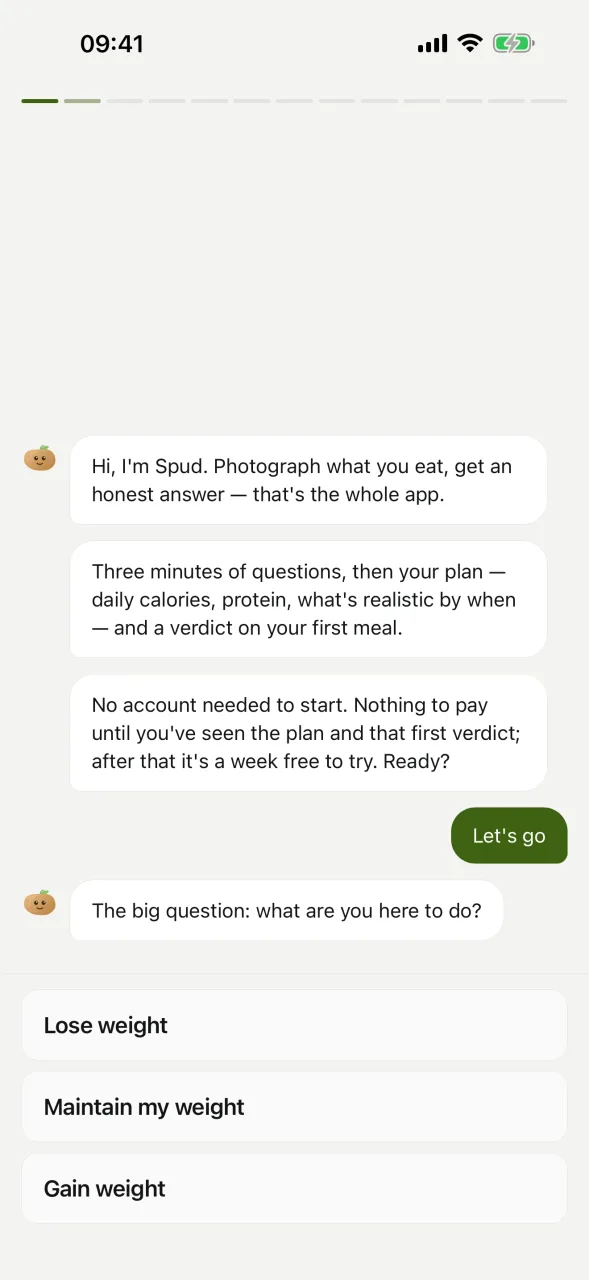
It asks, in words.
Three minutes of questions. What it will cost you is on the first screen, before a single answer is taken.
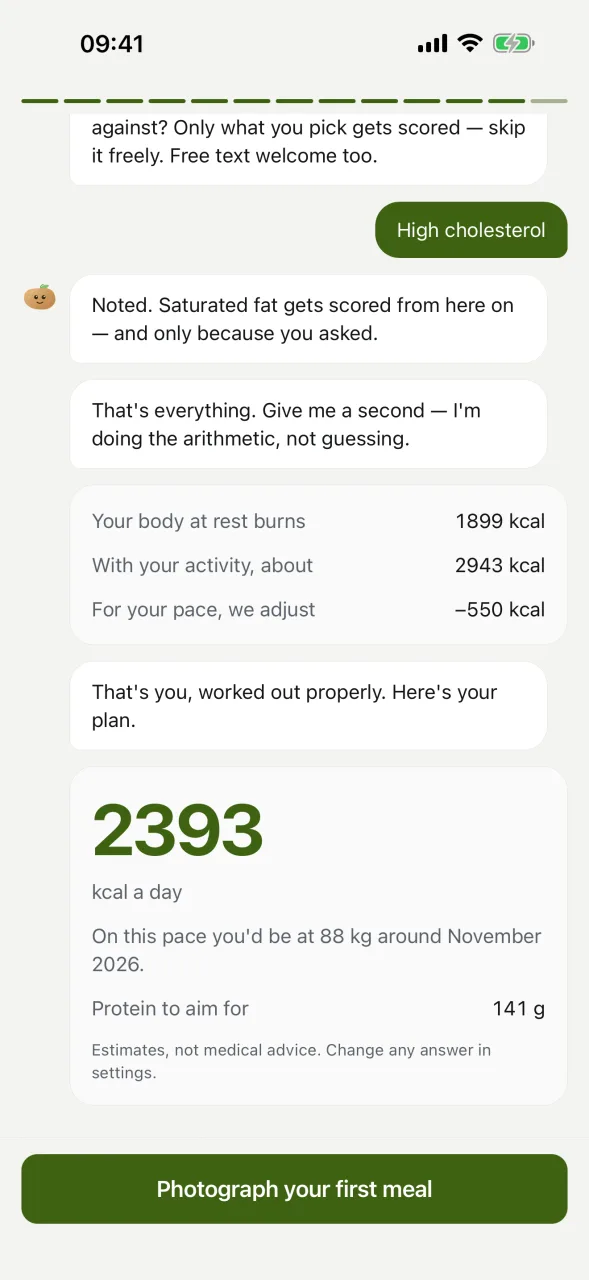
Then it shows the arithmetic.
Resting burn, activity, the pace you chose, the target that falls out. Every line on screen. Different numbers from the hero, because it is a different body.
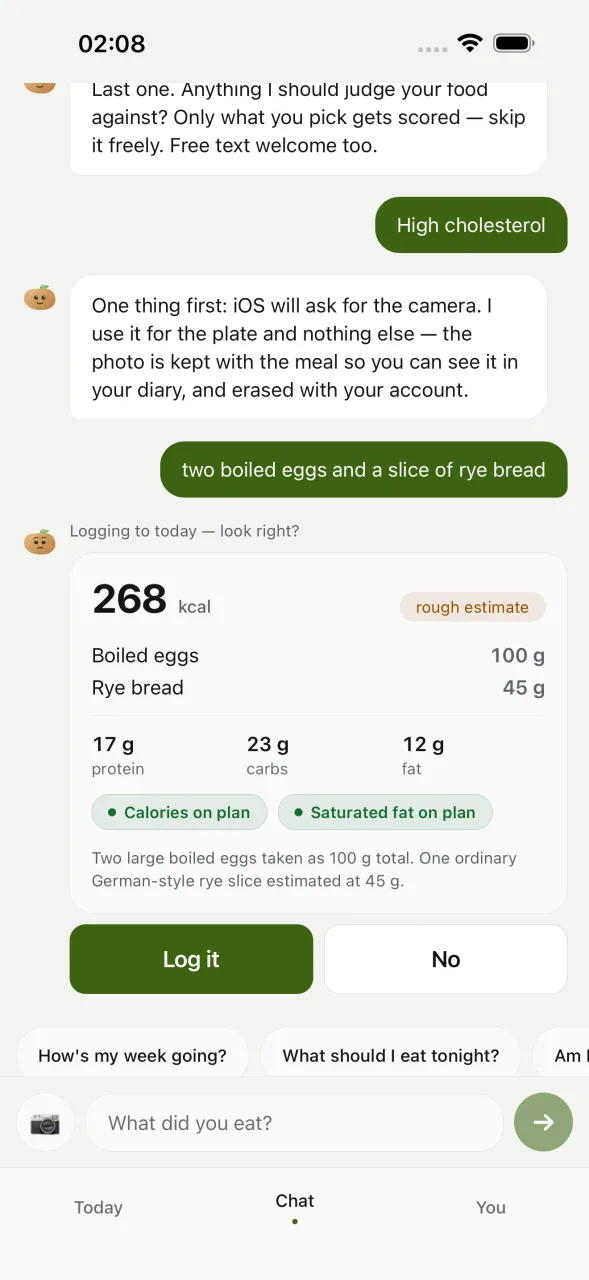
Say it, and it reads it back.
Two eggs and a slice of rye, typed. It answers with the grams it assumed and why, before anything is logged.
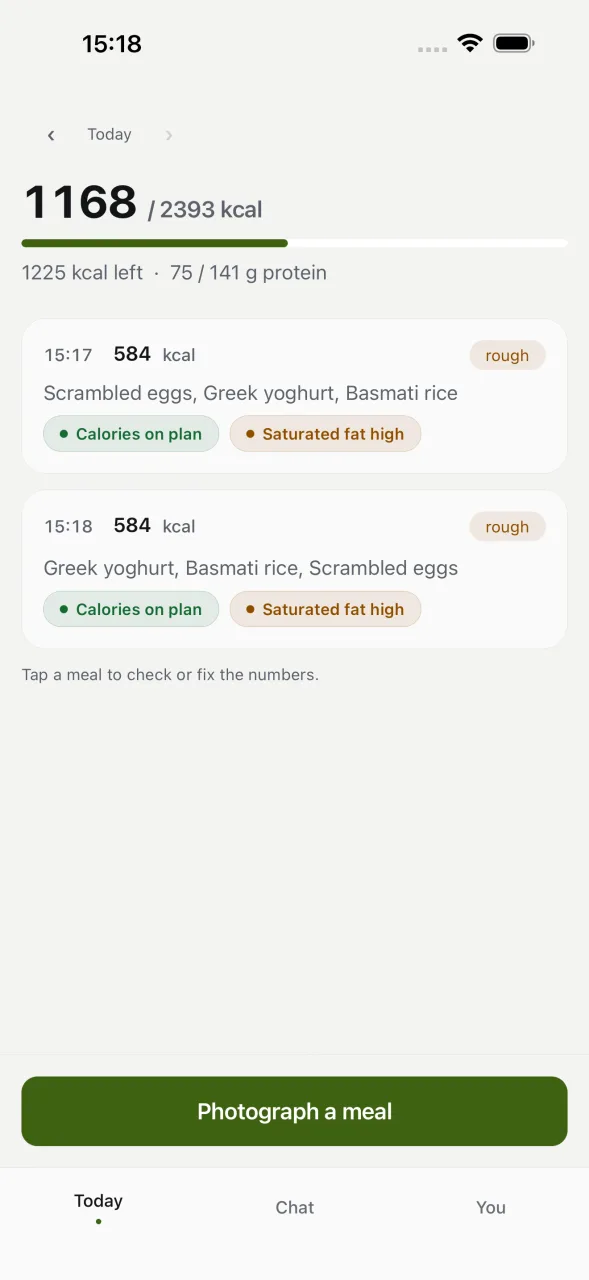
And the day fills up in front of you.
Every meal scored as it lands, what is left stated in kcal.
Struggle
Tracking breaks in the same three places.
Food diaries die for three reasons.
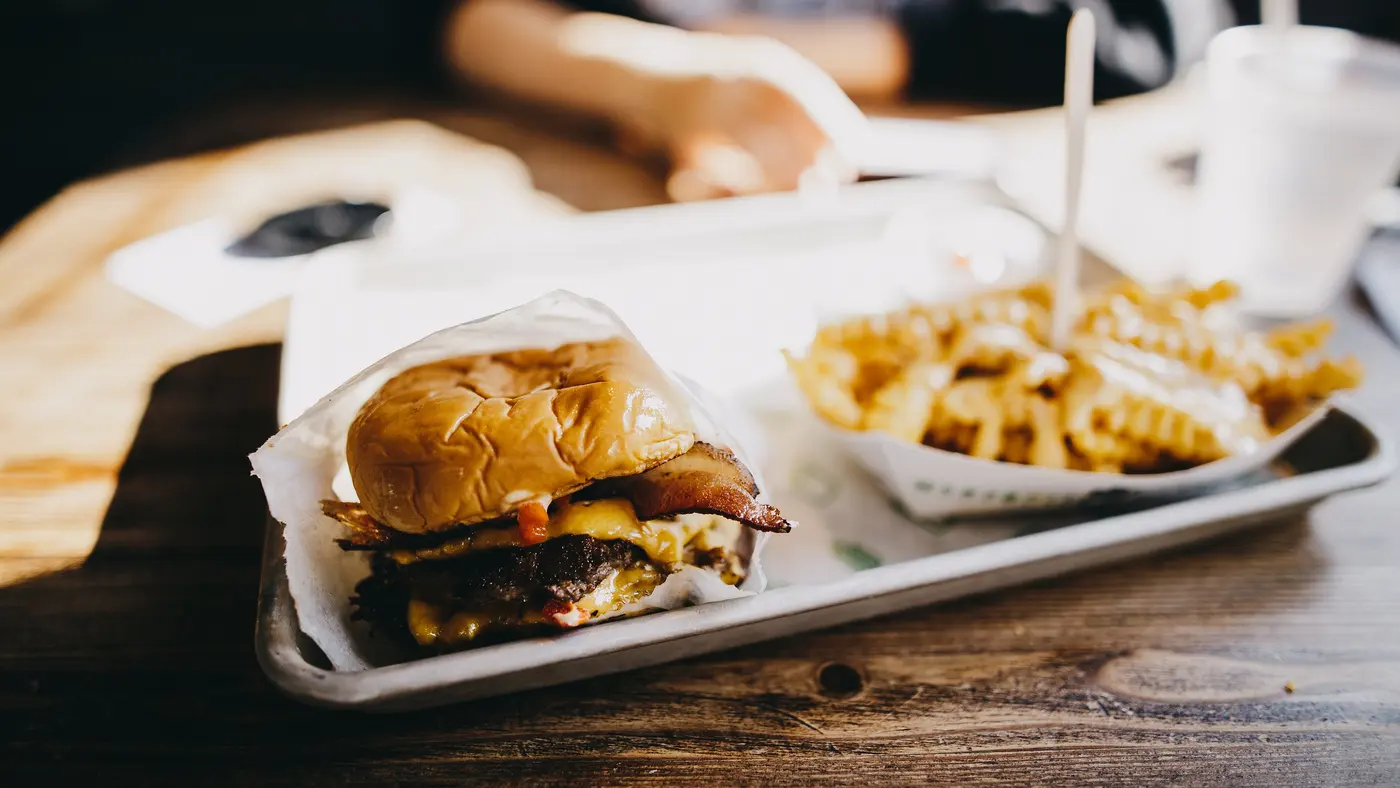
Portions are a guess.
A restaurant plate arrives with its portion unknown. eait reads it and shows the portion it assumed. If that is wrong, say so: half that, no oil.
The judging is left to you.
A diary writes 640 kcal and stops. eait says whether that was fine, in words.
One guessed dinner costs the week.
A small deficit has a small margin. A verdict on every meal is a check sized for it.
How it works
3 steps
Is this fine?
Chicken shawarma, large
640kcal1,140 kcal left, but over a third of your day and most of your sodium.
Send the meal.
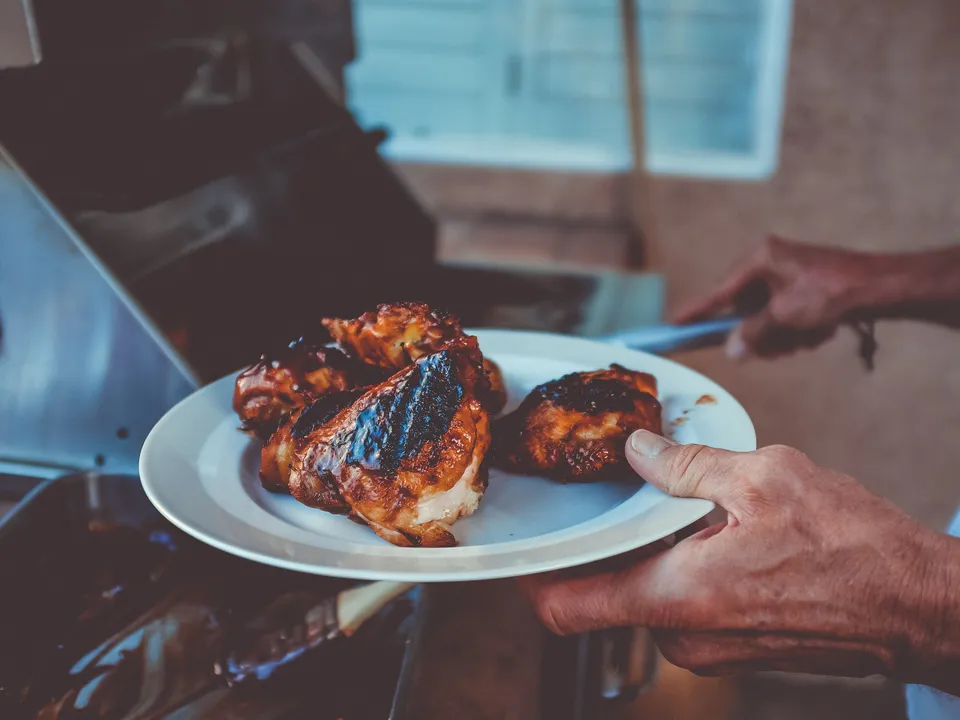
A photo, or a sentence: chicken shawarma, large. That is the whole input.
Read the numbers.
Calories, protein, carbs, fat, fibre, sugar and sodium, per item and totalled, with the portion it assumed. Under them, the verdict against your day.
Get better.
The verdict says what to change on the next plate. After a week you see it before the app does.
What you get
Edit it. Sync it. Ask it.
-
Corrections in a sentence.
Half that, no oil. The numbers and the verdict recompute.
-
Apple Health, both ways.
Meals go in. Weight, energy, activity and sleep come back, on one screen with your intake.
-
Ask about your week.
How was my week, what should dinner be. The answer reads your diary first.
Promises
What you can count on.
Analyze 15 meals. Pay only after.
Answer a few questions and send a meal. The first 15 answers are yours before anything is asked of you. Then a free week. The App Store shows the price in your currency before any charge.
2,792 low-star App Store reviews across seven apps in this category. The biggest complaint in every one: a charge nobody agreed to.
Your photo stays with your meal.
Stored beside the meal it logged, on our server in Germany. Erase the account and the photo goes with it.
One copy, on our server, used only to analyse your meal. It lives as long as your account and not a day longer.
There is a number your target never goes under.
1,200 kcal for women, 1,500 for men. Whatever the arithmetic said, your number stays above it.
No goal and no hurry gets under it, and when the floor is why your number is what it is, the app says so.
Eat out on Friday and the week still adds up.
Accuracy
A photo is an estimate. So it lets you argue with it.
Quiet errors are the ones that cost you the month. So eait shows its working.
The items it saw and the portion it assumed, on screen. Say half that, or set the grams, and the verdict is recomputed.
What we measured
On 8 reference dishes with weighed ingredients: median error about 28%, mean signed error +2%. 8 dishes is a smoke test rather than a study. We publish it because we could not find another app in this category that does.
I'm building this to get from 100 kg to 80.
I would rather be corrected than quietly wrong.
The floor
The number it stays above.
A daily target is the most consequential number an app like this produces. Three guards run, in this order, every time:
The deficit is capped at a share of maintenance.
20% of maintenance at most, so the cut scales with the person rather than with the impatience.
The floor is applied last, and unconditionally.
1,200 kcal for women, 1,500 for men. Applied after the cap, every time.
A target weight under a healthy BMI is refused.
Below a BMI of 18.5 the app declines to set the target. There is no dialog to click through.
I'm Spud. This is the one thing I'm strict about.
Privacy
Yours stays yours.
Signing in gives us an address. Nothing else does.
Sign in with Apple or Google hands over an identifier and your email address: no name, no contacts. We write to it about your account, and it is erased with the account. Without an account there is no address at all.
An account only when you want one.
The app works on a device identity it creates. Sign in for the same history on a second phone.
Deletion means deletion.
Delete the account and the meals, the profile, the conversation and the product analytics go with it.
Questions
Q&A
What does it cost?
Your first 15 analyses cost nothing and need no card, then a subscription with a free week. The App Store shows the price in your currency before you agree, and you cancel it there.
Why isn't it free?
Because every analysis after the first 15 runs through a model we pay for, per plate. Those first 15 cost you nothing so you can see what it says before deciding.
How accurate is it?
A photo is an estimate: about 28% median error on 8 reference dishes, a smoke test rather than a study. Say what it got wrong and the numbers and the verdict recompute.
Do I have to photograph every meal?
Every meal you want in the day's total, as a photo or a sentence. The photo is for the plate you cannot guess.
What happens when I miss a day?
Nothing. Each day is judged on its own and the next one starts at zero, and Spud does not comment on the gap.
Do I have to make an account?
No. It works on a device identity it creates. Sign in only to keep your history on another phone.
Is this medical advice?
No. It computes targets from what you tell it and scores meals against them. If a clinician gave you numbers, follow those.
Does it work outside the United States?
Yes. It reads the plate itself, so an unfamiliar supermarket is fine.
Is there an Android version?
iPhone first. Leave your email and we send one message when it ships.
Start with tonight's dinner.
15 meals, then a free week. The card comes last.
See it work before you give a card. Your photo stays with the meal and leaves with your account.
The mailing list
Hear when the iPhone app ships.
One address, kept apart from your meals and your account. Confirm it once. Every message carries an unsubscribe link, and an unconfirmed address is deleted within a week.
Deleting an eait account does not remove an address from this list. The two are kept apart on purpose, and the unsubscribe link is how you leave.
One message. I will not make a habit of it.